Last month, at the graduation of our first FlipWork™ cohort, a corporate executive who also teaches a course shared something I have been thinking about ever since.
She grew up in a family of 130 people. Her mother had fifteen brothers and sisters. If you know that world, you know there is no quiet in it. There is always music, always voices, always someone at the door. She told us, simply, that she had never known silence in her life.
During the sprint, she was working on three comp plans simultaneously, using AI as a thinking partner in ways she had never used anything before. One afternoon, as she walked out to run errands, she realized she could not listen to anything. No music. No podcast. Nothing. She walked in complete silence. And then she said something that stopped the room.
She asked us whether that was going to happen more and more. Whether we would all need to reset differently now, because our brains were processing at a level they had never had before.
A woman who had never known quiet was craving it. Not because she was struggling. Because her mind had crossed into new territory and was learning, in real time, how to live there.
In that same room sat a founder who built her company from her kitchen table, with almost nothing, to a business with products on shelves in tens of thousands of stores across the country. She came in knowing AI was coming. She had been hearing about it everywhere. She wanted a shortcut to crack the code on its limits, its risks, and its possibilities. What she did not expect was what she got.
She said:
"What I came out with at the end was literally game changing both personally and professionally. Most incredible looking back was how part of the curriculum involved standing in our reverence as a human being and what we're going to contribute to the world from that place."
A founder with decades of experience and a proven track record said the most incredible part was not the workflows. It was the human piece. That is the only part you cannot skip.
That room was full of professionals who decided something. Not about tools. About themselves. That is the decision this newsletter is about.
Para aprender a nadar, hay que echarse al agua. To learn to swim, you have to get in the water.
My mother said this whenever one of her students was ready but afraid. She was not rushing them. She was reminding them that the side of the pool and the water are two completely different teachers. What I watched at that graduation was people choosing the water. You could see it in the room. Once you go in, you do not come back the same.
Simply using AI tools is no longer enough. What separates the professionals pulling ahead right now is not better tools or bigger budgets. It is whether they have changed how they actually work. Most have not. And most do not realize it yet. Three findings from the latest research. Read them as a mirror.
1. The executives winning at AI are the ones doing it personally. The ones delegating it are falling behind.
BCG research cited in the WEF's January 2026 executive AI outlook found that C-suite leaders deeply engaged with AI are 12 times more likely to be among the top 5% of companies winning with AI. McKinsey's State of AI 2025 confirms the same pattern from a different angle: high-performing organizations are three times more likely to have senior leaders actively modeling AI use, not just budgeting for it or sponsoring from a distance. The instinct most senior leaders have is to put someone else in charge of the AI piece. The data says that instinct is the gap.
2. 88% of employees already use AI. Only 5% are using it to change how they work.
EY's 2025 Work Reimagined Survey of 15,000 employees and 1,500 employers across 29 countries found that while 88% of employees use AI at work, almost all of it stays at the surface: search, summarization, drafting. Only 5% use AI in ways that fundamentally transform their work. Gallup's February 2026 survey of more than 23,700 US employees hit the same wall from the other side: people report individual time savings, but not fundamental shifts in how work gets done, because the workflows were never redesigned. Being in the 88% feels like being ahead. The data says it is the starting line.
3. Sixty percent of CEOs are deliberately slowing down. The data says caution, without a framework, is now a risk of its own.
The BCG AI Radar, drawing on 640 CEOs and more than 2,300 leaders at large companies, found that 60% of CEOs have intentionally slowed AI implementation over concerns about errors and malfunctions, while 82% say they are more optimistic about AI than a year ago. That is not a contradiction. That is the Guardian profile in hard data: sound judgment, genuine caution, and no structure for what to do with either one. Caution is healthy. Caution without a framework quietly becomes a holding pattern. And holding patterns compound.
Myth: "I use AI every day. That means I'm ahead."
Why we believe it: Frequency looks like fluency. Daily use feels like progress.
Reframe: Using AI every day for the same work you have always done is efficiency, not reinvention. Docebo's 2026 AI Readiness Gap report, surveying 2,000 enterprise employees across six countries, found that 85% of employees say the AI training they received does not help them use AI in their actual role, and nearly 60% feel the training was not designed with people like them in mind. The pattern holds across every major research source this year: organizations are investing, training is not landing, and attendance is not transformation. One founder in our cohort built a system that took a process running hours of manual work every month down to minutes. That is not a faster version of the old job. That is a different person doing a different job. That is the line.
What to do this week: Write down the three things you use AI for most. Then ask yourself honestly: am I doing new things, or old things faster? If the answer is the latter, you have your starting point.
Three moves you can make.
1. Name the gap. Write down one task you hand entirely to AI. Then write down one thing only you can do because of your judgment, your relationships, or your specific context. That second column is where agentic work lives. Most professionals have never written it down.
2. Take the FlipFactor diagnostic. Eight minutes. A real read on your Agentic Velocity and the specific edges you need to build, calibrated to how you actually work, not a generic result.
3. See what others have built. Go hear it directly from them. The testimonials from this cohort are there. So are the details on what eight weeks of focused reinvention actually look like.
Last Friday, Nikki and I hosted our AI Reinvention Masterclass, and the response was beyond anything we prepared for.
We have been flooded with messages, feedback, and testimonials from people who attended. The energy confirmed what we already knew: the urgency is real and people are ready to move.
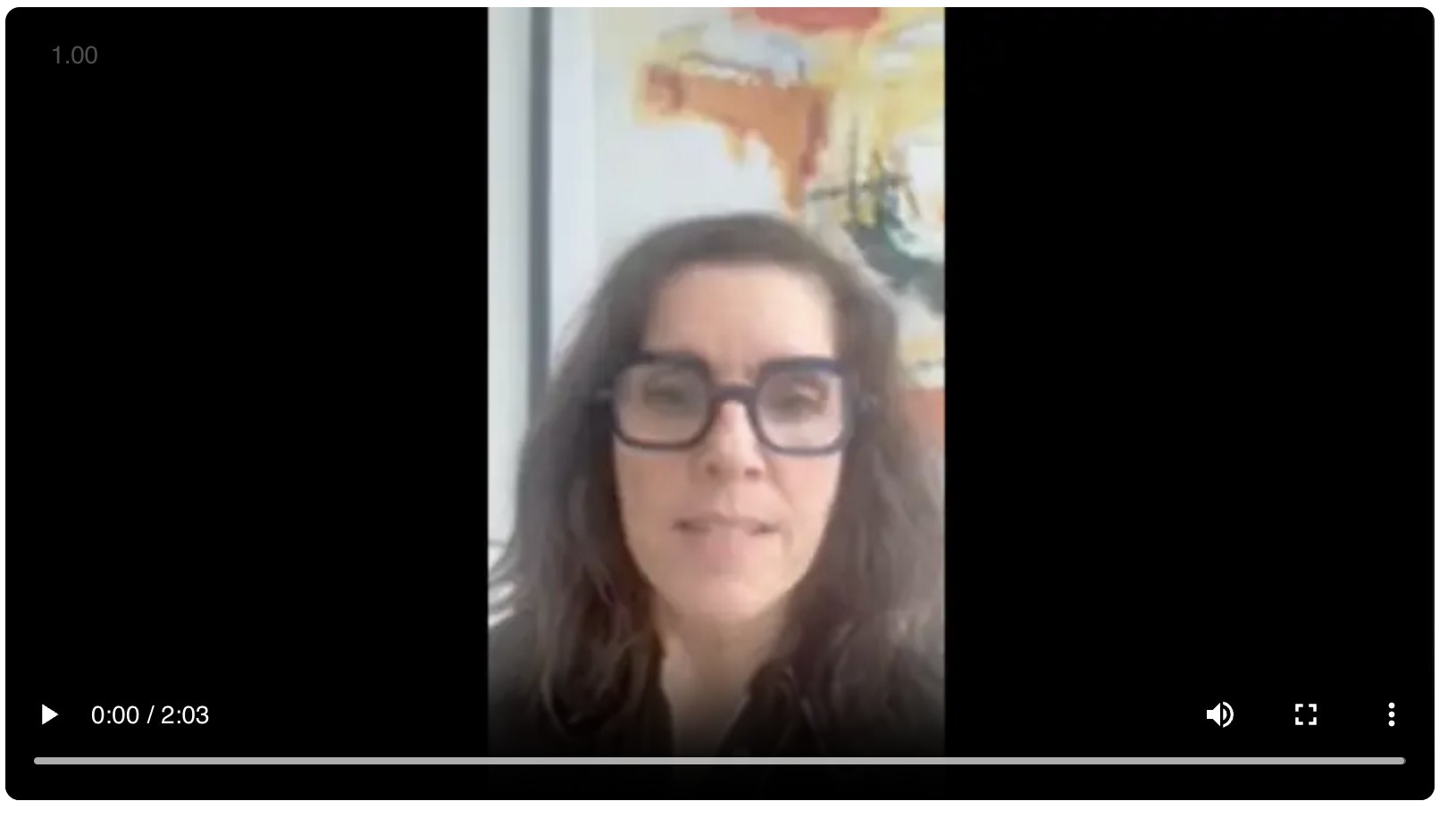
Here is what one member of our first sprint cohort had to say about her experience:
That response is why Nikki and I built this.
The next cohort of the FlipWork™ AI Reinvention Sprint starts June 18. If anything you read above sounds like where you are right now, this program was built for you.
The FlipWork™ AI Reinvention Sprint is an eight-week live program. Nikki and I work directly with every cohort. Sessions run Thursdays at 3pm CT and are recorded if your schedule needs flexibility. Between sessions, you have around-the-clock access to the FlipWork™OS platform.
This is not a passive course. It is structured reinvention with accountability, real feedback, and frameworks you build and use immediately. Enrollment closes as we approach the start date.
El que adelante no ve, atrás se queda. He who does not look ahead stays behind.
The room at graduation was full of people who looked ahead before they had to. That is the decision.
¡Hasta la próxima, un abrazo fuerte! (Until next week, a big hug!)